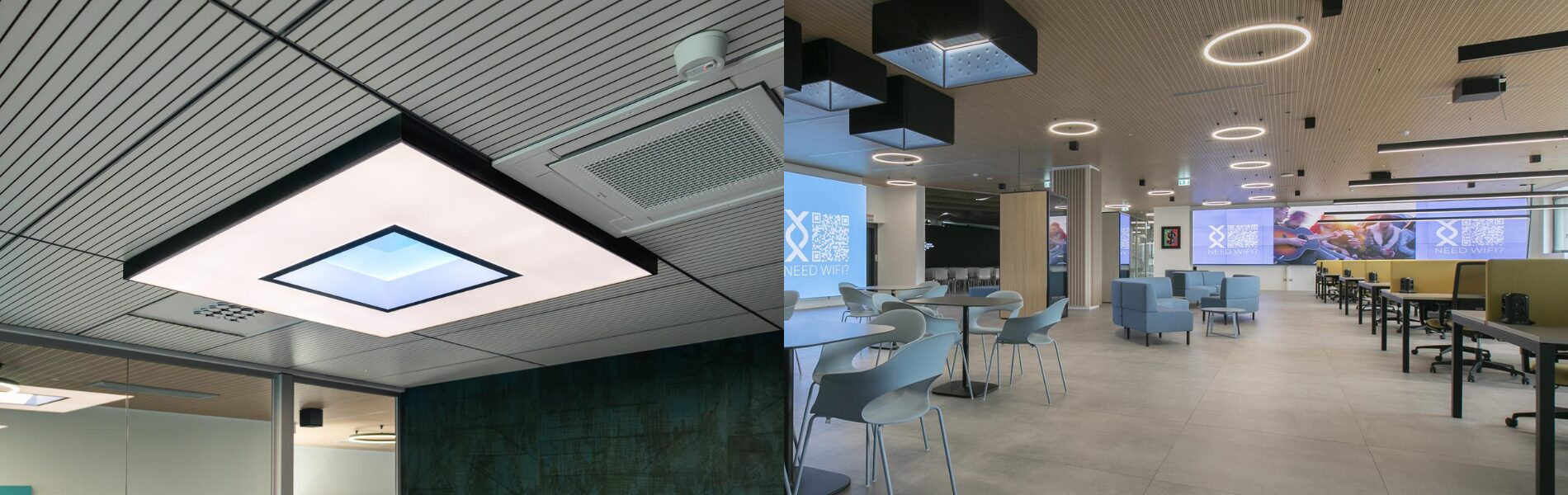
The project is part of the regeneration plan for the former Testaccio Slaughterhouse, which is being transformed into Rome’s new City of the Arts. Within this framework, the city’s first public center entirely dedicated to photography takes shape as a hub for promotion, research, and experimentation. Located in Pavilion 9D, the Center hosts exhibitions, events, and cultural activities focused on contemporary visual culture. The technological and lighting intervention turns light into a tool for architectural enhancement, artwork preservation, and immersive experience.
CONCEPT
Light as a curatorial device
Light is not just an exhibition element; it guides the visitor’s gaze, shapes the rhythm of the visit, and creates a balanced relationship between space, images, and audience. The lighting system enhances the industrial identity of the site without overpowering the photographic works.
Invisible technology, intense experience
The concept is based on a clear balance: a highly performing technological system that remains visually discreet. The goal is not simply to illuminate, but to give the site a technological soul while keeping the cultural experience at the center.
CHALLENGE
The main challenge was to integrate contemporary lighting and multimedia solutions into a historic industrial setting without altering its original identity. At the same time, photography requires highly controlled lighting conditions for both viewing quality and artwork preservation. The project therefore had to balance 4 key needs:
Perceptual quality.
Exhibition flexibility.
Technological sustainability.
Heritage protection.
>1000 sqm
of exposition area
1
Visit Levels
Solutions
The project was developed through the collaboration between Archeologia Industriale 2030 Scarl, responsible for the architectural recovery, and To Be with XAL, responsible for lighting and multimedia design. The intelligent lighting system was designed to:
Enhance industrial volumes through a minimal design approach.
Protect artworks with advanced LED technologies and sensors.
Create an immersive experience in which light guides the visitor.
Results
The project gives Rome a new public space dedicated to photography, combining urban memory, technological innovation, and cultural value. Through the integration of restoration, intelligent lighting, and multimedia tools, Pavilion 9D becomes a contemporary, accessible, and distinctive venue, ready to become a reference point for photographic culture in Rome and internationally.